.png) |
| The main lounge of a twin-aisle VIP aircraft; Elton John on a private Boeing, complete with piano bar, 1974. |
Showing posts with label Celebrities. Show all posts
Showing posts with label Celebrities. Show all posts
Monday, February 27, 2023
Elton John on a private Boeing
Saturday, November 12, 2022
Monday, March 28, 2022

Monday, June 29, 2020
Scotty Bowers
Scotty Bowers Journalist
George Albert "Scotty" Bowers is an American who was a Marine and, from the 1940s to the 1980s, a Hollywood pimp. Stories of his exploits circulated for many years and were alluded to in books such as Hollywood Babylon.
 |
| According to film critic Peter Debruge writing for Variety in 2006, "Everyone knows Scotty. After all, he’s been serving drinks to the Beverly Hills crowd for almost 60 years, working a different party almost every night of the week, sometimes two a day." The veracity of Bowers' many claims was endorsed by Gore Vidal; in his last public appearance Vidal spoke at the official launch of the memoir. Robert Benevides, the partner of actor Raymond Burr, said to the LA Weekly: "Scotty just liked to make people happy." Film director John Schlesinger and investigative reporter and novelist Dominick Dunne also attested to Bowers' honesty |
 |
| Joan Allemand, a former arts director of the Beverly Hills Unified School District, who knew Bowers for more than 20 years and introduced him to his subsequent co-writer, Lionel Friedberg, said: "Scotty doesn't lie about anything. He's a poor kid from a farm in Illinois, and when he got here, his two assets were his big penis and charming personality. That's what he used to feed his family." Cecil Beaton wrote of his sexual encounters with Bowers in his published diary of the 1960s, while Debbie Reynolds wrote in her memoirs of Milton Berle employing him for a party prank. A profile in the New York Social Diary attested to Bowers' connections, career of sexual support, and happy-go-lucky character: "Clients all agreed that he was 'very good' at what he did, and very agreeable... And very discreet. He did not discriminate. He even had one regular longtime client... who had no arms and no legs... The Scotty I knew was a guy who always seemed to be enjoying his life working morning, noon and night, with never a gripe; always with a smile to greet you, and never with an axe to grind. After a lifetime in Hollywood, that's a remarkable feat and its own kind of Zen." |
 |
| It has been suggested that Bowers' claims were dismissed by some not simply because "virtually everyone he talks about has died", but because "many in the industry still cling to a prudish, homophobic and manufactured version of the past." According to Matt Tyrnauer, director of a documentary on Bowers, it is merely proof of "the enduring power of the (Hollywood) myth machine... created there—by outsiders, Jewish immigrants themselves who were furriers and glove manufacturers projecting a lie of a made-up image of white Americanism... I think there are a lot of people who want to cling to that." |
 |
| Author William J. Mann, who interviewed Bowers for a biography of Katharine Hepburn, said, "I found him forthright and honest and not interested in personal fame or gain." At that time he turned down Mann's offer to write about him or introduce him to a literary agent. Author and journalist Tim Teeman, who also interviewed Bowers, wrote that "as candid as Bowers was, he was also respectful, and when it came to sex and sexuality utterly without shame and judgment." |
 | |||||
Anthony Perkins is best known for playing Norman Bates in Alfred Hitchcock's Psycho, and he was nominated for an Academy Award for his role in Friendly Persuasion. Perkins was intense, sensitive, and complex, according to Scotty Bowers in Full Service. He was married with two kids but also gay. His longest gay relationship was with actor Tab Hunter, but he saw many men. Bowers writes that Perkins always wanted someone different. Bowers writes, "He always wanted someone different. 'Who've you got who's different, Scott?' 'Who do you have for me for tomorrow night that will surprise me? Anything really new?"

“Of course, he was carrying on with Tab Hunter for a long time, we were told on good authority,” artist Don Bachardy told author Charles Winecoff in Split Image: The Life of Anthony Perkins. Only in mixed gatherings, such as a party at acting teacher Elaine Aiken’s, would Perkins allow himself to be seen with Hunter. They would go on movie dates but buy tickets separately and sit apart. The Vista Theater, near the predominately gay neighborhood of Silver Lake, attracted a primarily male audience, and Perkins felt comfortable sitting with Hunter there. “Tab was a known homosexual at the time,” camera operator Leonard Smith remembers. “I don’t think Tony was, he kept to himself. But he used to have Tab come on the set two or three times a week, and they’d have lunch or something. The crew made a lot of jokes about it; they were cruel. Of course, Tony was upset. He’d go off to his dressing room, and answer them in a way that said he didn’t want any more of it. If guys made cracks, he’d get upset and just walk away from them.”
 |
| George Cukor |
George Cukor was a legend in the movie industry. He had directed Camille, starring Greta Garbo, along with classics like Romeo and Juliet and The Philadelphia Story. Cukor had sex with Scotty Bowers, author of Full Service. In their first encounter, Bowers writes that Cukor "moved over to me, began to fondle my balls, then rapidly stroked me to a full erection. In no time at all he started to suck on my erect penis. He was so good at what he was doing that before I knew it I was dizzy with ecstasy and simply lay back until I experienced an absolutely exquisite orgasm." Then, Cukor quickly showered, asked Bowers to shower, and insisted on paying Bowers. Bowers realized that he always has blunt sexual encounters like this. "There was never any foreplay or necking. There was no preamble, nor was there ever any form of penetration. Anal sex was out of the question. To put it crudely, just like my friend, Cole Porter, George just wanted to suck dick. And he would do it with a quick, cold efficiency."
 |
| Cole Porter |
Cole Porter was a composer and songwriter, and he won the Tony Award for Best Musical for Kiss Me, Kate. In Full Service, Scotty Bowers says Cole Porter asked Bowers to bring two or three Marines over to his house. When Bowers arrived, several young handsome men were there — and his wife, Linda, was not. Bowers writes, "I soon learned that Cole's passion was oral sex. He could easily suck off twenty guys, one after the other. And he always swallowed." On another evening, Bowers took nine of his best-looking young guys over to Porter's house and Porter "sucked off every single one of them in no time. Boom, boom, boom and it was all over." Bowers slept with Porter also. Bowers said Porter "loved to suck me off and then have me fondle him until he reached his own orgasm." Porter was insecure and told Bowers to throw a dinner party and invite a group of 12 or 14 people who had all known Porter for a long time. Porter said he'd hide under the dinner table and eavesdrop as Bowers asked them questions about Porter. They covered the dinner table with three large bedsheets and Porter crawled underneath the table. He heard the entire dinner conversation and never once came out from under the table.

Rock Hudson was best known for his Academy Award-nominated role in Giant with Elizabeth Taylor and Pillow Talk with Doris Day. Rock Hudson's homosexuality was carefully kept secret by his gay agent, Henry Willson, and the studio. They managed to conceal his sexuality right up until the time he died of AIDS in 1985.

He was married to Phyllis Gates, who was a lesbian. In Full Service, Scotty Bowers writes, "Over the year I arranged many tricks for [Gates]. She liked her female sex partners slim, dark-haired, and young." In William J. Mann's Behind the Screen: How Gays and Lesbians Shaped Hollywood, an 80-year-old man talks with Mann about the 1950s when it seemed everyone in Hollywood was gay. He said, "Don't repeat all that crap about how tough Rock Hudson had it. You know how he had to pretend to be straight and live a lie and all that. That was just surface. Rock Hudson had it easy. You just have to ask any Joe from Peoria what life was like for him. Who didn't have to lie? Who didn't have to pretend? The difference was, in Hollywood, our bosses lied for us. They protected us. We had a whole community, for God's sake. We had — dare I say it? — power. Where else in America did gays have such a thing?"

Cary Grant was an English actor and considered one of classic Hollywood's definitive leading men. He was nominated twice for an Academy Award for his roles in Penny Serenade and None But the Lonely Heart. Randolph Scott was an actor best known for Heritage of the Desert, a film that established him as a Western hero. Cary Grant was married to Barbara Hutton, but he was sharing his house with actor Randolph Scott when Full Services's Scotty Bowers met him. Scott was also married. When Bowers was with Grant and Scott, he writes, "The three of us got into a lot of sexual mischief together. Aside from the usual sucking — neither of them were into fucking, at least not fucking guys, or at least not me — what I remember most about the first encounter was that Scott really liked to cuddle, and talk, and was very gentle." Grant and Scott's relationship lasted for years. They eventually ended up sharing a home together behind the famed Chateau Marmont Hotel in Hollywood as well as their Malibu beach house.

Tyrone Power was an actor most known for The Mask of Zorro and Blood and Sand. In Full Service, Scotty Bowers writes, "Women swooned over him and he bedded quite a few of them, but he much preferred men." He preferred young men in particular, and "some of his sexual tastes were rather odd and offbeat, but none of the guys seemed to mind. He was always meticulously careful about who he saw. He fiercely guarded his reputation at the studio and his position as a highly visible actor, so few outside of a very tight circle could point a finger at him and accuse him of indiscreet behavior." Bowers had a ménage à trois with Power and a random girl, even though Power was married. Bowers writes, "As we romped around that rather grimy hotel room that night it was patently clear to me that Ty had a healthy and inventive sexual appetite, but one that was infinitely more focused on me than it was on my girlfriend. I felt truly sorry for the poor guy. It must have been very tough for him to have to perpetually hide who he really was."

Ramon Novarro was a Mexican film, stage, and television actor who is best known for Ben-Hur and Across to Singapore with Joan Crawford. Novarro was fairly open about his sexuality among industry insiders. In William J. Mann's book Behind the Screen: How Gays and Lesbians Shaped Hollywood, Mann writes that Novarro was Haines' polar opposite: quiet, reserved, a devout Roman Catholic...yet at the same time, he was as much involved in the gay subculture as Billy Haines — although he usually prayed for absolution the next day." He and Haines were scolded by MGM's producer, Louis B. Mayer, for patronizing a male brothel on Wilshire Boulevard. In Full Service, Scotty Bowers writes that Novarro loved oral sex so much he referred to semen as "honey." Bowers writes, "He would call me up and say, 'I need some honey. Urgently. Tonight. Help me out and find me a few guys. Please.'" Bowers would bring five or six young guys over to his house, and Novarro, who had a drinking problem, would summon each young man in one by one while Bowers sat in the living room with the other men. Bowers writes, "Within the space of half an hour he would go through them all and then stumble out and call the first one in again." But the first man could not ejaculate again since he already ejaculated, so Novarro would get mad at Bowers, but he was so drunk, he quickly forgot. His alcoholism got out of control. On the morning of Oct. 30, 1968, his body was discovered by his servant in his North Hollywood home. He had been beaten to death by two young male hustlers who thought he had thousands of dollars in cash stashed away in his house. He didn't.

Playwright Tennessee Williams was most known for The Glass Menagerie and A Streetcar Named Desire. In Full Service, Scotty Bowers says Williams was still grieving over his longtime companion, Frank Merlo, a sailor he had met who died of cancer in 1963, when Bowers met him. Bowers started sleeping with Williams, who Bowers said "proved himself to be a horny devil once we got to know one another." Bowers remembers him as a very insecure man. Merlo's death, his unhappy childhood, his sister Rose's mental illness and institutionalization, his fractured relationship with his younger brother Dakin, his depression, and his addition to prescription drugs all took a heavy toll on him.

Noel Coward was an English playwright, composer, actor, and singer known for his wit and flamboyance. Coward had many lovers in his day, including Prince George, the Duke of Kent; actors Alan Webb and Louis Hayward; and playwright Keith Winter, according to Scotty Bowers in Full Service. His longest relationship was with the South African actor Graham Payn. He slept with Bowers and never had penetrative sex. Bowers writes, "It was strictly oral, with lots of bodily touching, caressing, and kneading in between." Bowers writes that on one occasion, Coward bought Bowers a first-class return steamer ticket to come to his home in the Caribbean with him. Another time, Coward asked Bowers to spend a vacation in Tahiti with him, but both times, Bowers declined. Coward would attend parties where Bowers would do his infamous "Swizzle Stick Trick," where he'd stir drinks with it. Bowers writes, "People loved to order cocktails and watch me stir them with my flaccid penis. Needless to say, I would always add ice to the drink only after I'd stirred it!"

The street date of Scotty Bowers’ “Full Service: My Adventures in Hollywood and the Secret Sex Lives of the Stars,” written with Lionel Friedberg, is Valentine’s Day, but the eagerly anticipated memoir has been generating buzz for several weeks, and will most likely encounter a firestorm of criticism from some segments of the Hollywood set. It offers the former Marine paratrooper, pump jockey and bartender’s accounts of three decades of having sex with — or arranging others to have sex with — some of the biggest names of Hollywood’s Golden Age — Cary Grant, Vincent Price, Edith Piaf, Spencer Tracy and the Duke of Windsor.

The title is a not-so-subtle reference to the job that was Bowers’ entree into his career as a sexual “fixer,” pumping gas at the Richfield station at 5777 Hollywood Blvd., where he began to connect former Marine Corps pals and other acquaintances with Hollywood elite looking for secretive sexual encounters — gay and straight — in an era where the studio system and the mores of the day kept a lid on sexual activity and orientation.
 |
| Walter Pidgeon |
 |
| Jacques Potts |
He says his first “trick” came in 1946, with actor Walter Pidgeon and milliner-to-the stars Jacques Potts, and other bold-faced names Bowers mentions along the way include composer Cole Porter, director George Cukor, Cary Grant and Randolph Scott, Katharine Hepburn and Vivien Leigh. The initial impulse, of course, is to compare Bowers’ allegations about his career with that of Heidi Fleiss, the Hollywood Madam, and though both pandered to the prurient interests of the entertainment industry, Bowers’ fantastical story goes further.
 |
| FBI director J. Edgar Hoover |
 |
| porn star John Holmes |
 |
| Alfred Kinsey |
When he wasn’t crossing paths with the likes of FBI director J. Edgar Hoover and porn star John Holmes, Bowers writes, he acted as stud service for infertile couples in Colorado, assisted .at least one Hollywood star in a custody battle and helped Alfred Kinsey research his book “Sexual Behavior in the Human Female,” as well as connect Kinsey with former Egyptian ruler Farouk I and his legendary stash of pornography.
 |
| Iwo Jima |
 |
| Brian Epstein |
By the time Bowers has finished sharing anecdotes about fighting on the island of Iwo Jima in World War II and once assisting Beatles manager Brian Epstein (one of his tricks) in whisking the Fab Four out of the hands of groupies during an August 1964 visit to Los Angeles, he’s been less than one degree away from so many people and events in popular culture one starts to wonder if “Forrest Hump” might have been a more appropriate title.

This doesn’t mean that “Full Service” is an easy book to read. It isn’t — for several reasons. Chief among them is the gnawing question about the book’s veracity — especially given the fact that virtually all of the people he mentions in the book are long gone and unable to refute his account. (Asked about this in a recent phone interview, Bowers’ response was: “Not only did I do all the things I said I did in the book, I did even more.”) The pacing of the book is a bit uneven in places, choppy in others, and full of purple prose throughout (it’s unclear, for example, why an account of his childhood on the farm needed to include a sentence like: “As my fingers tugged on the cow’s soft teats, her warm milk squirted into the pail.”) and occasionally punctuated by a rhetorical elbow to the ribs. While it’s easy to marvel at his sexual escapades, it’s hard to forge any kind of emotional connection with Bowers, who comes across as well-endowed in the ego department as he suggests he is below the belt and who rattles off the names of his sexual partners with all the emotion of making a shopping list. He even refuses to label his own sexual orientation as straight, gay or bisexual. And even those who consider themselves open-minded and not the least but prudish — gay or straight — may find some of the specific details are too much of an over share (such as some of British actor Charles Laughton’s alleged peccadilloes). Even more troubling — especially in light of the current allegations about teachers at the Miramonte Elementary School — is Bowers matter-of-fact account of his childhood activities, which included his introduction to sex by his adult male neighbor, having sex with not one but several Roman Catholic priests, and arranging a lesbian tryst between a 13-year-old classmate and his own grade school teacher. "The Los Angeles Times" 14feb2012
 |
| Gore Vidal wrote that Bowers was a long time friend whose stories he believed. |
Sunday, December 25, 2016
Good Bye Old Friend George Michael: Pop superstar dies at 53

George Michael Died
Singer George Michael has died at his home at the age of 53.
The star, who launched his career with Wham! in the 1980s and had huge success as a solo performer, "passed away peacefully" on Christmas Day in Goring, Oxfordshire, his publicist said.
His manager, Michael Lippman, said he had died of heart failure.
Former Wham! bandmate Andrew Ridgeley said he was "heartbroken at the loss of my beloved friend".
Writing on Twitter and referring to Michael by his family nickname of "Yog", he added: "Me, his loved ones, his friends, the world of music, the world at large. 4ever loved. A xx"
On Instagram, Sir Elton John posted a photograph of himself with Michael, writing: "I am in deep shock. I have lost a beloved friend - the kindest, most generous soul and a brilliant artist. My heart goes out to his family and all of his fans."
Michael's family announced news of his death in a statement issued through the singer's publicist.
"It is with great sadness that we can confirm our beloved son, brother and friend George passed away peacefully at home over the Christmas period," it said.
"The family would ask that their privacy be respected at this difficult and emotional time. There will be no further comment at this stage."
A small heart wreath and a rose are among the tributes left outside the front door of Michael's home, a detached property by the River Thames.
Court battle
Michael, who was born Georgios Kyriacos Panayiotou in north London, sold more than 100 million albums throughout a career spanning almost four decades.
He first found fame with schoolfriend Ridgeley in duo Wham! - reaching number one in the UK singles charts on four occasions. One of the band's most enduring songs Last Christmas, is currently number 16 in the UK singles chart.
The song was originally released in 1984 and is the biggest selling single not to reach number one.
It was kept off the chart's top spot by Band Aid's Do They Know It's Christmas, which actually featured Michael.
Solo albums followed, including the multi-million selling Faith in 1987.
The follow-up Listen Without Prejudice Vol. 1 outsold Faith in the UK but led to Michael losing a court case with record label Sony over his frustration at how the album has been marketed.
His talents as a singer, songwriter and music producer made George Michael one of the world's biggest-selling artists.
Blessed with good looks and a fine singing voice, his stage presence made him a favourite on the live concert circuit as he matured from teen idol to long term stardom.
But there were times when his battle with drugs and encounters with the police made lurid headlines that threatened to eclipse his musical talent
As a solo artist, Michael scored a further seven number one singles in the UK with songs including Careless Whisper and Fastlove, collaborated with the likes of Aretha Franklin and Elton John, and won three Brit Awards and two Grammys.
The Grammy organisers said Michael's "extraordinary talent had a profound impact on countless entertainers worldwide, and his creative contributions will live on forever".
Troubled artist
Michael later began facing headlines for reasons other than his music.
After years of refusing to be drawn on speculation about his sexuality, Michael disclosed he was gay in 1998 after being arrested in a public toilet in Beverly Hills, California, for engaging in a lewd act.
The music video for the single that followed, Outside, featured a men's bathroom transformed into a disco and policemen kissing.
In October 2006 he pleaded guilty to driving while unfit through drugs, and in 2008 was cautioned for possession of class A drugs, including crack cocaine.
In September 2010, Michael received an eight-week prison sentence following an incident in which he crashed his Range Rover into a shop in north London. He admitted driving under the influence of drugs and possessing cannabis.
Pop stars from Michael's heyday were joined by contemporary names in paying tribute on Twitter.
His talents as a singer, songwriter and music producer made George Michael one of the world's biggest-selling artists.
Blessed with good looks and a fine singing voice, his stage presence made him a favourite on the live concert circuit as he matured from teen idol to long term stardom.
After early success in the duo Wham! he went on to build a solo career that brought him a string of awards and made him a multi-millionaire.
But there were times when his battle with drugs and encounters with the police made lurid headlines that threatened to eclipse his musical talents.
George Michael was born Georgios Kyriacos Panayiotou in North London on 25 June 1963. His father was a Greek Cypriot restaurateur who had come to the UK in the 1950s, while his mother was an English dancer.
It was not altogether a happy childhood. Michael later recalled that his parents worked constantly to improve their financial status leaving little room for affectionate moments. "I was never praised, never held. So it wasn't exactly the Little House on the Prairie."
He moved with his family to Hertfordshire while in his teens and met Andrew Ridgeley, a fellow pupil at a local school. The two discovered they had a shared interest in music and, together with a group of friends, formed a ska band which had a short lived existence.
In 1981 Michael and Ridgeley formed Wham! Their first release, Wham Rap! failed to trouble the charts but the follow up, Young Guns (Go For It) established the group after they were asked at the last minute, to perform it on Top of the Pops complete with dancers. The record quickly rose to No 3 in the UK charts.
PA
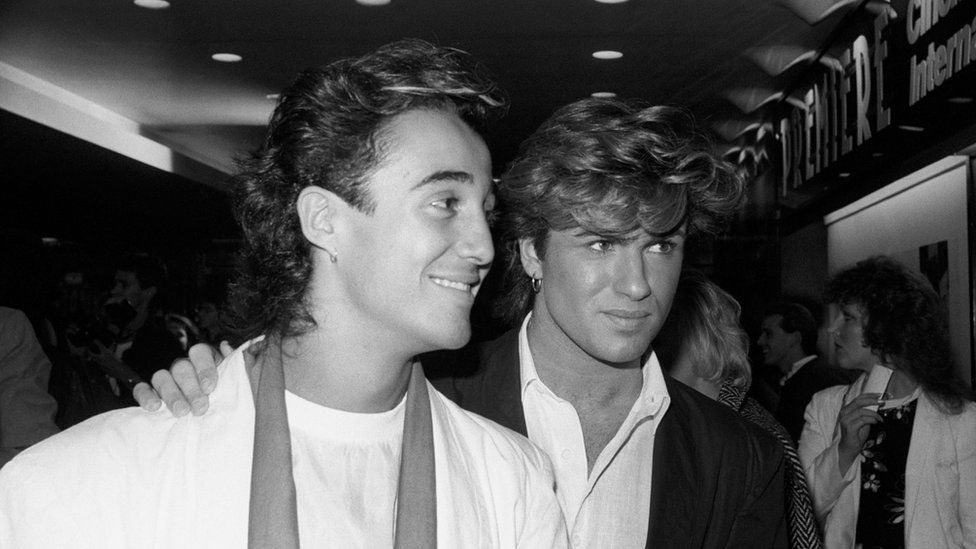
The duo initially adopted a leather-clad rebellious image with songs such as Bad Boys, but moved to a more pop-oriented approach with the world-wide hit, Wake Me Up Before You Go-Go, while the band members swapped their leathers for more fashionable attire.
With Michael very much the front man, it was almost inevitable that he would eventually strike out on his own. The 1984 single, Careless Whisper, while co-written by Ridgeley, was to all intents and purposes a George Michael solo effort. Indeed it was credited to Wham! featuring George Michael in the US.
Wham! finally split up in 1986 and in the spring of the following year Michael released I Knew You Were Waiting (For Me) a duet with one of his musical icons, Aretha Franklin.
He was also beginning to experience doubts about his sexuality. In an interview with The Independent he blamed his depression after the Wham! breakup on the dawning realisation that he was not bisexual but gay.
Legal battle
Michael spent most of 1987 writing and recording his first solo album, Faith, which was released in the autumn of that year. It went to the top of both the UK and US charts going on to sell more than 25 million copies and winning a Grammy in 1989.
The first single from the album, I Want Your Sex, caused some controversy, particularly on US radio stations. Many refused to play it at all while others played a version substituting the word love for sex. In any event the single reached the top three on both sides of the Atlantic.
A 1988 world tour cemented Michael's status as a pop superstar although the constant touring and the adulation of thousands of screaming teenage girls left him feeling exhausted and only exacerbated the periods of depression that he was now beginning to experience on a regular basis.
Indeed he refused to promote his second album, Listen Without Prejudice Vol. 1 and no videos were made to back up the single releases. A much more introspective work than Faith, the album was aimed at a more adult audience.
PA

It failed to achieve the success of his previous work in the US although there were contrasting fortunes in the UK where it actually outsold Faith.
While playing a concert in Rio on his Cover to Cover tour in 1991 he met Anselmo Feleppa, the man who would become his partner, although Michael still did not publicly state that he was gay. Their relationship was to be short-lived as Feleppa died of a brain haemorrhage in 1993.
Plans for Listen Without Prejudice Vol 2 were scrapped amidst a legal dispute with his record company, Sony. In what proved to be a long and costly battle Michael finally severed his relationship with Sony.
In 1996, Michael released the single, Jesus to a Child, a tribute to his dead lover, Feleppa. It went straight to No 1 in the UK. The single featured on the Older album, which had been three years in the making when it was released in 1996.
Coming out
A dark and sometimes melancholy work, Older contained a number of references to his sexuality and his change of image saw the long hair and beard replaced by a cropped haircut and leather clothes.
The album was a big success in the UK and Europe but achieved disappointing sales in the US, where audiences still seemed to hanker after Michael the pop superstar rather than the more serious artist that he had aspired to become.
He was voted Best British Male at the Brit Awards and won the title Songwriter of the Year for the third time at the Ivor Novello awards.
The death of his mother from cancer saw him spiral into another round of depression. He told GQ magazine that he had contemplated suicide and had only been dissuaded by the support of his new partner, Kenny Goss.
PA
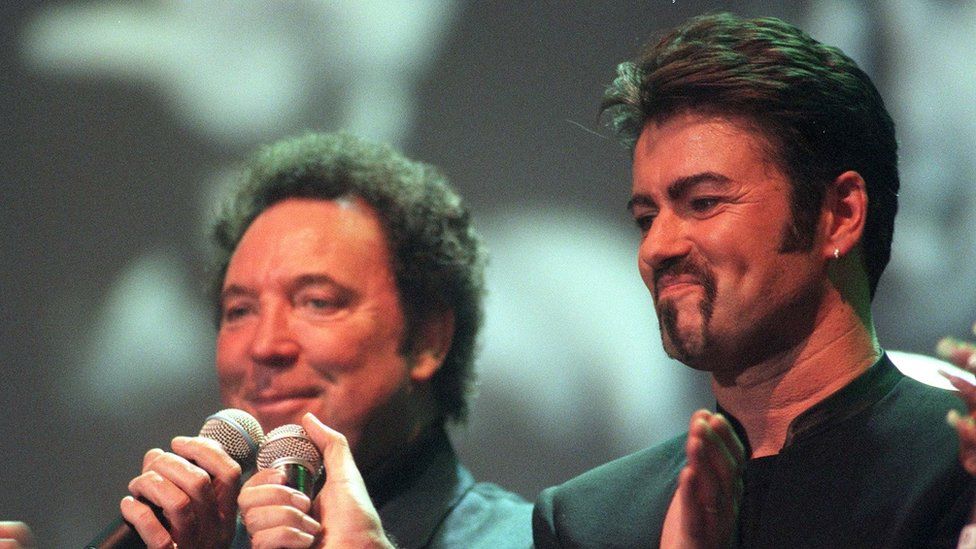
In April 1998 he was arrested in a Beverley Hills public toilet by an undercover police officer and charged with engaging in a lewd act. He was fined and sentenced to 80 hours of community service.
The incident finally persuaded him to go public about his sexuality and his relationship with Kenny Goss, a Dallas based businessman.
He continued to record, releasing an album of cover tracks in 1999 entitled Songs from the Last Century, before spending two years writing and recording the album, Patience, which was released in 2004.
It was seen as something of a comeback, achieving instant success in the UK and even reaching No. 12 in the US, a market that seemed to have rejected him.
Following the release of Patience, he told the BBC that he would no longer make albums for sale to the public, preferring to produce free downloads of his music and ask fans to contribute money to charity.
In 2006 he set off on his first live tour for 15 years and became the first artist to perform at the newly reopened Wembley Stadium.
His private life continued to dominate the headlines. In February 2006 he was arrested and charged with possession of class C drugs and in July of that year the News of the World printed allegations that he had been engaging in sexual activity on London's Hampstead Heath.
Michael threatened to sue photographers for harassment but admitted that he often went out at night seeking what he called "anonymous and no-strings sex."
In August 2010 he was sentenced to eight weeks' imprisonment after pleading guilty to driving while under the influence of drugs. He was released after serving half his sentence.
Just before the start of a concert in Prague in 2011 he announced that he had split from his partner Kenny Goss two years previously, blaming Goss's addiction to alcohol and his own battles with drugs.
George Michael was a man whose talent made him a global star but he was never comfortable in that role. He once admitted that, in his younger days, the figure adored by thousands of screaming fans was just a kind of alter-ego he sent out on stage to do a job.
He fought hard to be accepted as a serious singer-songwriter and record producer, and successfully adapted his style to suit a more mature audience, all while struggling with depression and doubts over his sexuality.
He will be remembered as one of the more enduring musicians of the 80s generation.
Subscribe to:
Posts (Atom)
Cheers

-
 Schloss Friedrichshof in Kronberg im Taunus, Hesse, near Frankfurt am Main, was built between 1889 and 1893 for the dowager German Empr...
 -
 Charming Spanish-Mediterraneaninspired home in a prime location, blending timeless character with modern comfort. The main level offers thr...
 -
 Almost a hundred years ago, there were those who could outfit a private railcar the same way some today outfit private jets. This particu...